There is no formal qualification for being a cultural wedding videographer in Phoenix. We have filmed weddings across many traditions, and this page is the record of them: what we shot and what we learned.
There is a practical reason this matters, and it has nothing to do with sensitivity training. It is that we know what is coming. We know the zaffe arrives before anyone in the room expects it. We know the glass break lasts about one second and there is no second take. We know the khigga will pull four hundred people onto the floor at once and that you need to already be standing in the right place. A videographer seeing your tradition for the first time learns those things by missing them.
Below is every cultural and religious wedding we have filmed, grouped by tradition. Where we were not personally in the room, we say so.
Palestinian weddings
Hana and Khalid, Cave Creek. A private home rather than a venue, which is common and which changes how a film gets made: there is no coordinator, no timeline handed to you, and no second room to retreat to.
The bride called Khalid in with his entourage for the zaffe, and the dabke filled the floor afterwards. There were no live musicians at this one. The DJ carried the music, which is worth saying because a lot of couples assume a zaffe requires a drummer and a horn player to be booked months out. It does not have to.
The couple sat on a kosha. If you are planning one, tell your videographer where it will be placed before the day, because it fixes the sightline for the entire reception and a badly positioned camera cannot recover from it.
Jewish weddings
We have filmed Jewish weddings at opposite ends of the state.
Eva and Josh, The Scottsdale Resort and Spa
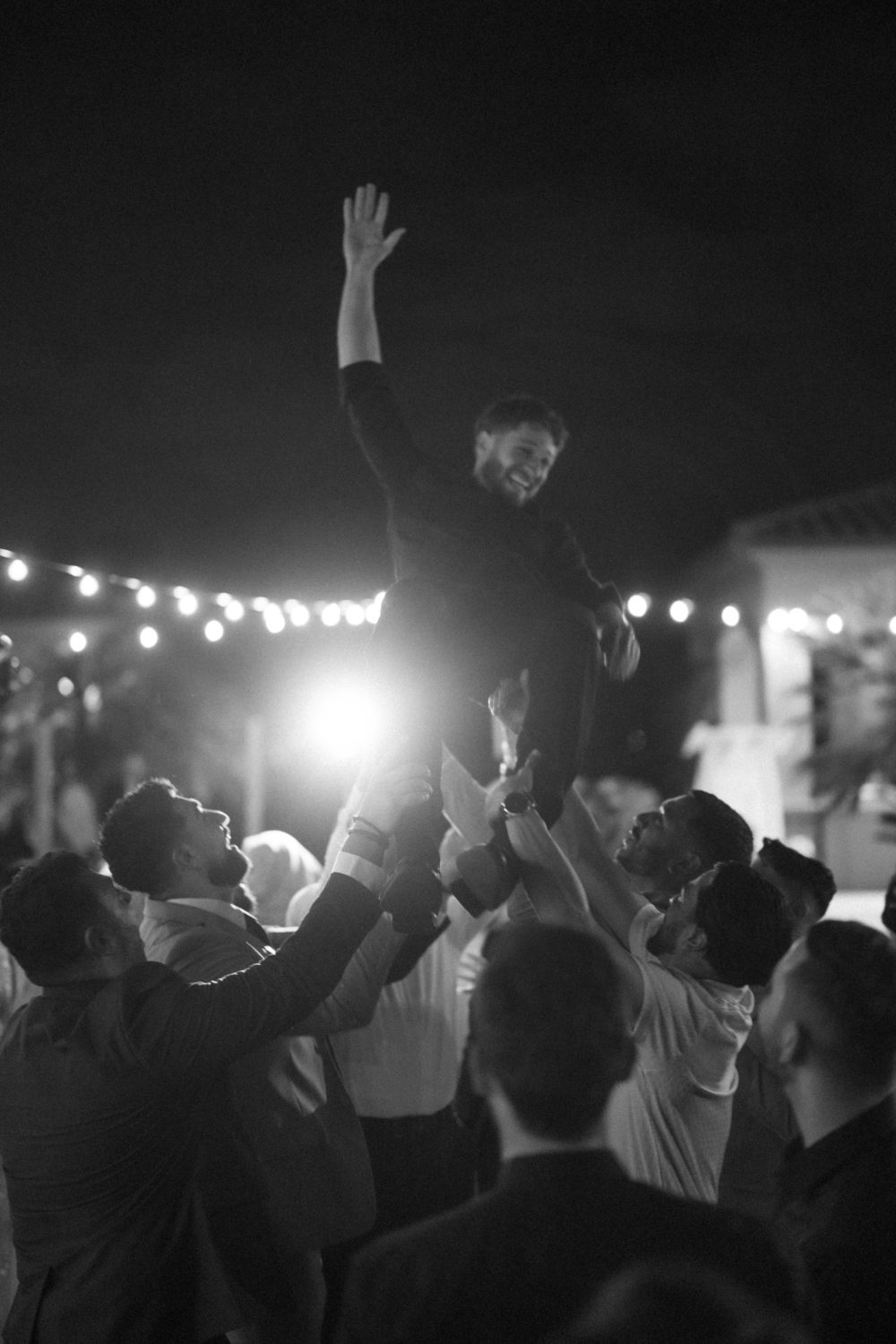
Josh broke the glass. That moment is the one every family asks about afterwards and it is over in about a second, so it is worth knowing that a videographer who has filmed it before will be locked off and waiting rather than swinging toward it.
We filmed what happened and we filmed it well. If your ceremony includes elements ours did not, tell us and we will ask your rabbi what matters rather than guessing.
Alexis and Asher, Saguaro Buttes, Tucson
A desert wedding outside Tucson, which brings its own problem: the light at Saguaro Buttes is beautiful and it is also completely unshaded, and it changes fast in the last hour before sunset.
Pakistani weddings
Hanna and Ejaz. Three separate events across three locations: the Nikah, the Mehndi at Val Vista Lakes, and the Walima at the Phoenix Airport Marriott.
This is the thing couples underestimate about a Pakistani wedding, and it is a budgeting question more than a creative one. Three events is not one wedding day with extra hours attached. It is three separate call times, three load ins, three sets of light, and three rooms to learn. Ask any videographer you are considering whether their package covers all three or whether the Mehndi is an add on, because the answer is frequently the second one and it is frequently not said out loud.
Kurdish weddings
Roushun and Iman, Tanque Verde Ranch, Tucson. A guest ranch rather than a ballroom, and a long way from Phoenix, which meant travelling to it rather than working a room we already knew.
Indian and Hindu weddings
Akshita and Alex, ISKCON Chandler and The Westin Kierland
Two days and two entirely different weddings. Thursday was the Hindu ceremony at the ISKCON Radha Krishna Temple in Chandler. Friday was a Western ceremony on the Northern Sky Terrace at The Westin Kierland in Scottsdale.
At the temple, the bride’s family welcomed the groom in. Both then went onto the stage with the priest and made offerings to the deities, with flowers and food given to the fire.
Sanjana and Anil, SoHo63, Chandler
Kevin and Sheetal, Grand Hyatt Scottsdale
A Hindu and Christian wedding with two priests and both rites performed in full. If you are planning a fusion ceremony, this is the one worth watching, because the pacing problem is real: two complete ceremonies in one day means the film has to hold attention through the second one, and that is an editing decision made long before the day.
Assyrian weddings
Ashoraya and Stephney, Arizona Grand Resort, Phoenix. Four hundred guests, a live band, and the khigga.
The khigga is the reason to hire someone who has filmed an Assyrian wedding before. It is not a dance floor moment you cut to. It is most of the room, moving together, for a long time, and a camera operator who has not seen one will spend the first several minutes finding a position instead of shooting from it.
Romanian Orthodox weddings
Diana and Mihai, Saint John the Baptist, Glendale. The tradition we were least prepared for and the one we now tell other couples about: the groom’s party arrives at the wrong house first. If nobody has told your videographer that is coming, they will film it as a mistake rather than as the joke it is.
Latter day Saint weddings
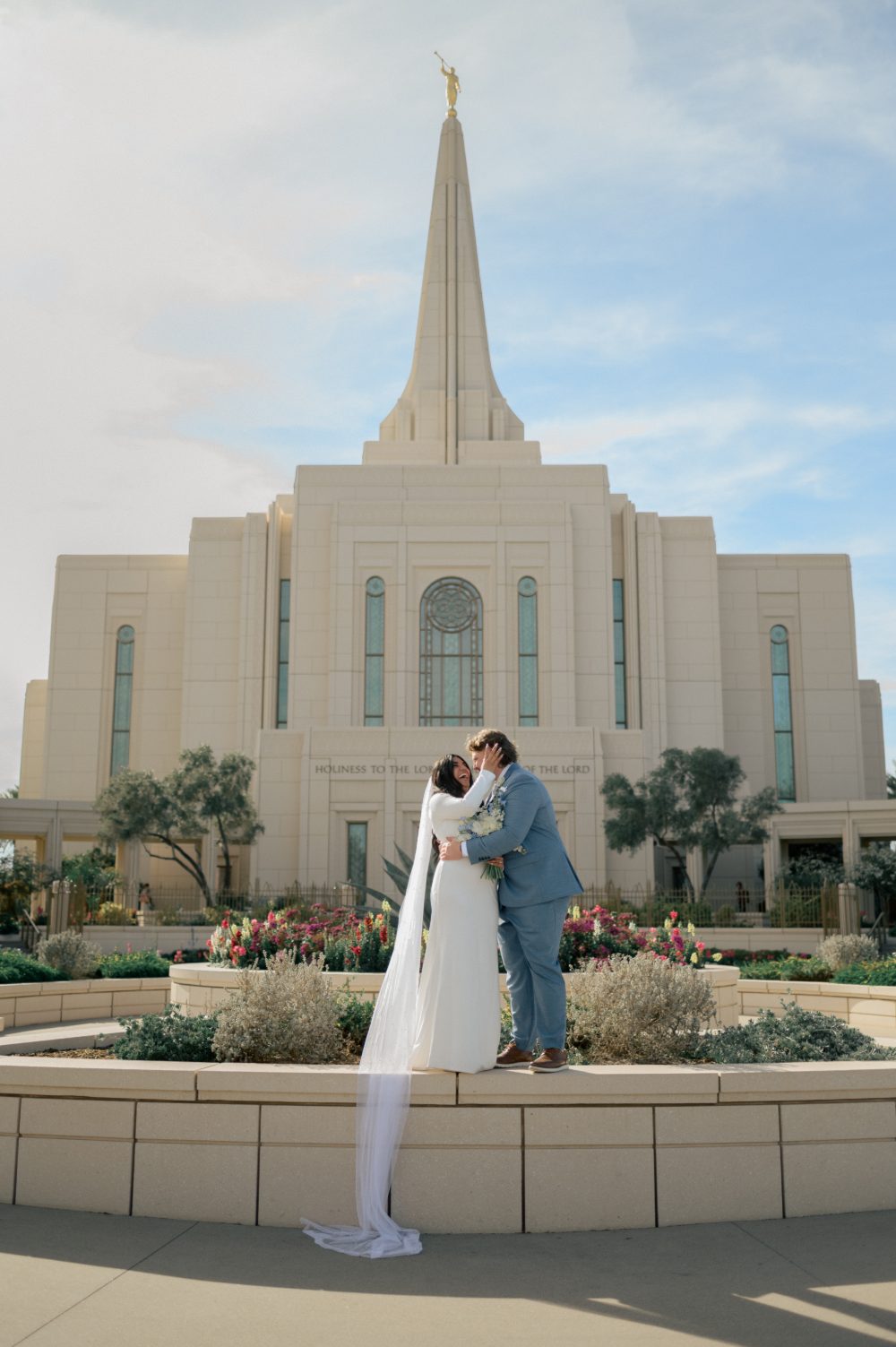
We have filmed weddings at the Mesa and Gilbert Arizona temples, which means we understand the part most videographers get wrong: we cannot come inside, and neither can a good many of your guests.
The Ember Edit was founded by a Latter day Saint, so the traditions and norms of a temple wedding day are ones we know well. Nobody has to explain the day to us, and nobody has to explain why it matters to you.
That is not a limitation to work around quietly. It is the shape of the day. The film is built from what happens before, from the exit, from the bridals and the first look on the temple grounds, and from the reception. A videographer who treats the sealing as a hole in the footage will hand you a film that feels like it is missing something. It is not missing anything. It was never ours to record.
Hanna and Tristen, Mesa Arizona Temple
Alayna and Shaylor, Gilbert Arizona Temple
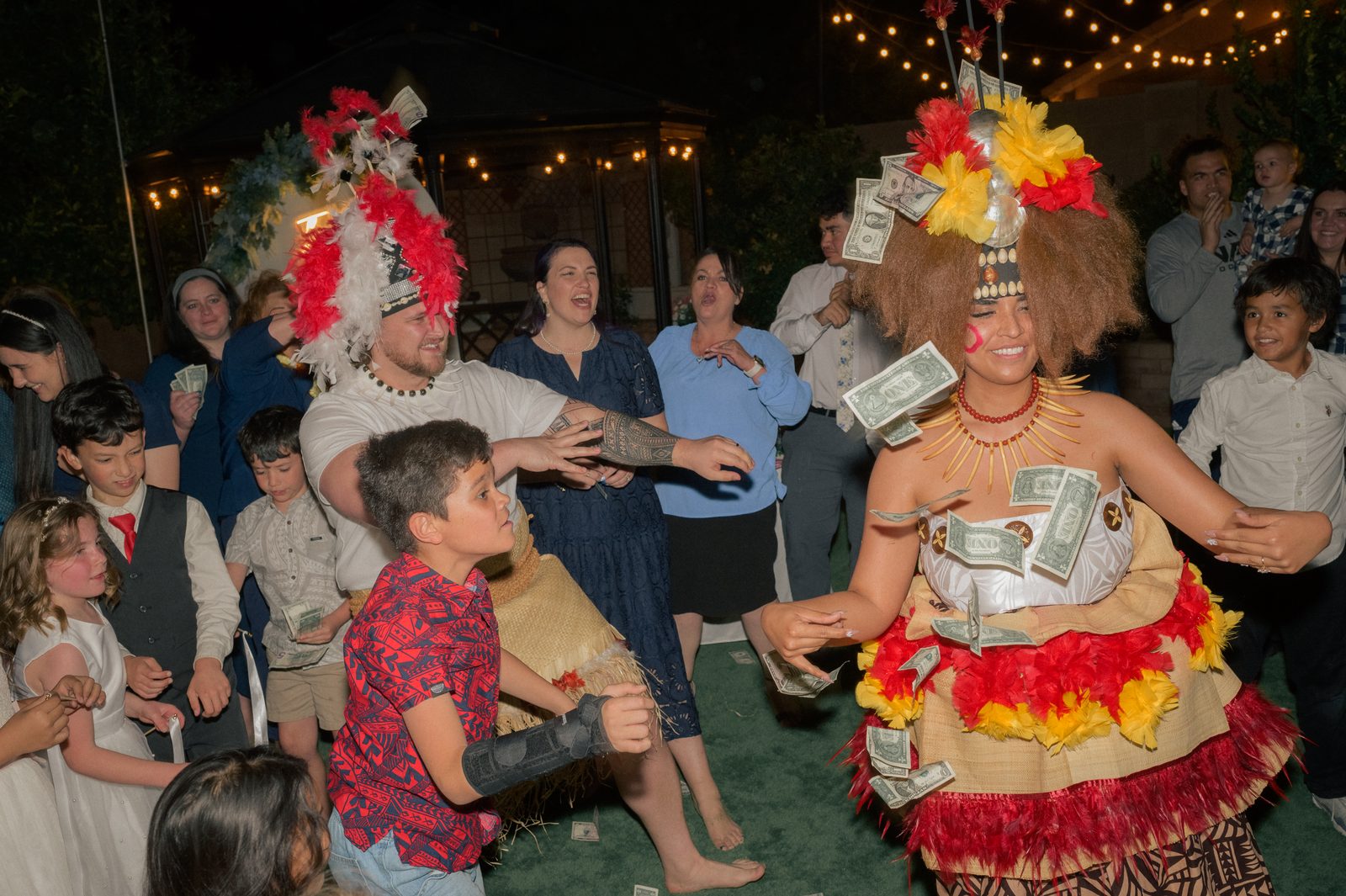
Talia and Enoch, Gilbert Arizona Temple and a Tongan reception
Sealed at the Gilbert temple, with a backyard reception afterwards built around Tongan dances and Tongan dress. A backyard is a harder room than a ballroom, not an easier one, because the light is whatever the sky and the string lights give you and there is no rig to hang anything from.

Catholic weddings
Brett and Michelle, Saint Bernadette, Scottsdale. Church weddings run on the parish’s rules rather than yours, and those rules vary more than couples expect. Ask your parish where a videographer may stand before you book one, not after.
What to ask any videographer about your tradition
- Have you filmed this tradition before? If not, that is not disqualifying. Ask what they will do to prepare instead.
- How many events does your package cover? A Mehndi, a Nikah and a Walima are three days of work. So are a Thursday temple ceremony and a Friday reception.
- Where will you be standing during the ceremony? Churches, temples and mosques all have rules, and they are not the same rules.
- Who is actually shooting my wedding? Ask it plainly. Every film on this page is ours.
Filming a cultural wedding in Phoenix or Scottsdale
The Ember Edit is a wedding videography team based in Scottsdale, working throughout Phoenix, Mesa, Chandler, Gilbert, Tucson, Sedona and the rest of Arizona. If your wedding carries traditions that matter to your family, tell us about your day and we will ask the right questions before the camera comes out.


Comments